Language Learning Apps That Focus on Speaking, Not Flashcards
Knowing a word on a flashcard is not saying it. Speaking-first apps compared: Speak, Praktika, Fluently, ISSEN, Pimsleur, HelloTalk, italki and WitSpeak.

Quick answer
If flashcards taught you words you still can't say, pick an app where every session is spoken. AI conversation apps such as Speak, Praktika, Fluently, ISSEN and WitSpeak (our product) make you talk and correct you; Pimsleur drills spoken answers by audio; HelloTalk and italki put you in conversation with real people.
Disclosure: WitSpeak is our product. Every other app below is described only from its own website or store listing, checked on November 24, 2026; sources are at the bottom. No prices or ratings, because they change and vary by country.
Here is the uncomfortable part about flashcards: they train recognition. You see a word and remember what it means. Speaking is the reverse job. You start with a meaning and have to find the words, put them in order and say them before the other person loses patience. You can be very good at the first and still freeze at the second, because you never practiced it.
What makes an app speaking-first
- You say full sentences out loud in every session, not only single words.
- Something answers you, so you have to react instead of reciting.
- You get feedback on what you said: a correction, a better version, or a pronunciation note.
- You can repeat the same situation until it feels easy, then try a harder one.
Speaking-first apps compared
| App | What you say out loud | What corrects you | Languages (per vendor) |
|---|---|---|---|
| Fluently | Chat or voice calls with an AI partner in scenarios, topics and personas, after short phrase lessons | Corrections on every message; scored pronunciation | Conversation in 29 languages; iPhone app |
| HelloTalk | Voice calls and voice rooms with native speakers | Native speakers, in exchange for your help | Many; it is a community, not a course |
| italki | A full lesson of conversation with a human tutor | Your tutor, live | 150+ languages |
| ISSEN | Realtime voice conversation with an AI tutor that remembers past sessions | Instant corrections | 59 languages; web, iOS and Android |
| Pimsleur | Spoken answers to audio prompts; roleplay with interactive transcripts | Voice Coach pronunciation feedback; model answers | 50+ languages |
| Praktika | Lessons and free conversation with AI avatar tutors | Instant corrections on pronunciation, grammar and word choice | English, Korean, Japanese, Spanish, French, Portuguese, Italian, German |
| Speak | Phrases repeated out loud, then conversation with the Speak Tutor | Real-time feedback on pronunciation and grammar | Korean, Japanese, French, Spanish, Italian, English, Chinese |
| WitSpeak | Free Talk with Mia or Alex, 80+ adult roleplays, beginner lessons | Fluency, vocabulary, grammar and pronunciation after each answer, plus a stronger version of what you said | English, Spanish; French and German in Early Access |
Best if you want a course that talks back: Speak or Fluently
Speak teaches the phrases native speakers use, has you repeat them out loud until they are automatic, then puts you in a conversation with its AI tutor. Fluently pairs short phrase lessons with an AI partner you can chat with or call, in scenarios with goals. Both keep the structure of a course while making speaking the main activity. Fluently is an iPhone app, so Android users should look elsewhere.
Best if you want open conversation with AI: Praktika or ISSEN
Praktika's tutors are avatars with personalities and accents; its site says they can explain in your native language and that you can start a free conversation on any topic. ISSEN is a realtime voice tutor that its site says remembers you across sessions and covers 59 languages on web, iOS and Android. Choose by which language you need and whether you prefer a face or a voice.
Best if your eyes are busy: Pimsleur
Pimsleur is audio-first: a prompt plays, you answer out loud, you hear the model answer. It adds roleplay with Speak Easy transcripts and pronunciation feedback from Voice Coach, though its site notes not every feature is available in its English as a Second Language courses. It is the speaking-first option you can use while driving.
Best if you want real people: HelloTalk and italki
AI is patient and always available, but people are unpredictable in a way that matters. HelloTalk connects you with native speakers for chat, calls and voice rooms, free to start. italki books you a human tutor without a subscription. Use them to test what you rehearsed with an app.
Best if you know the words but freeze: WitSpeak (our product)
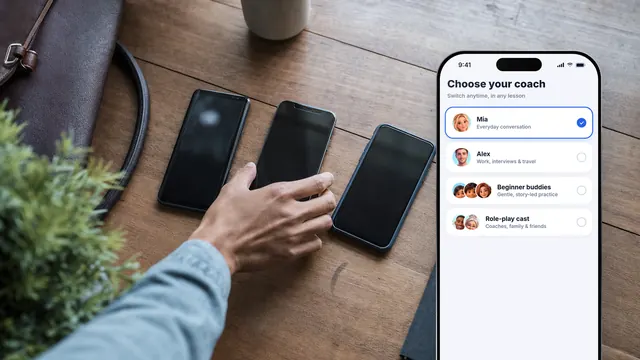
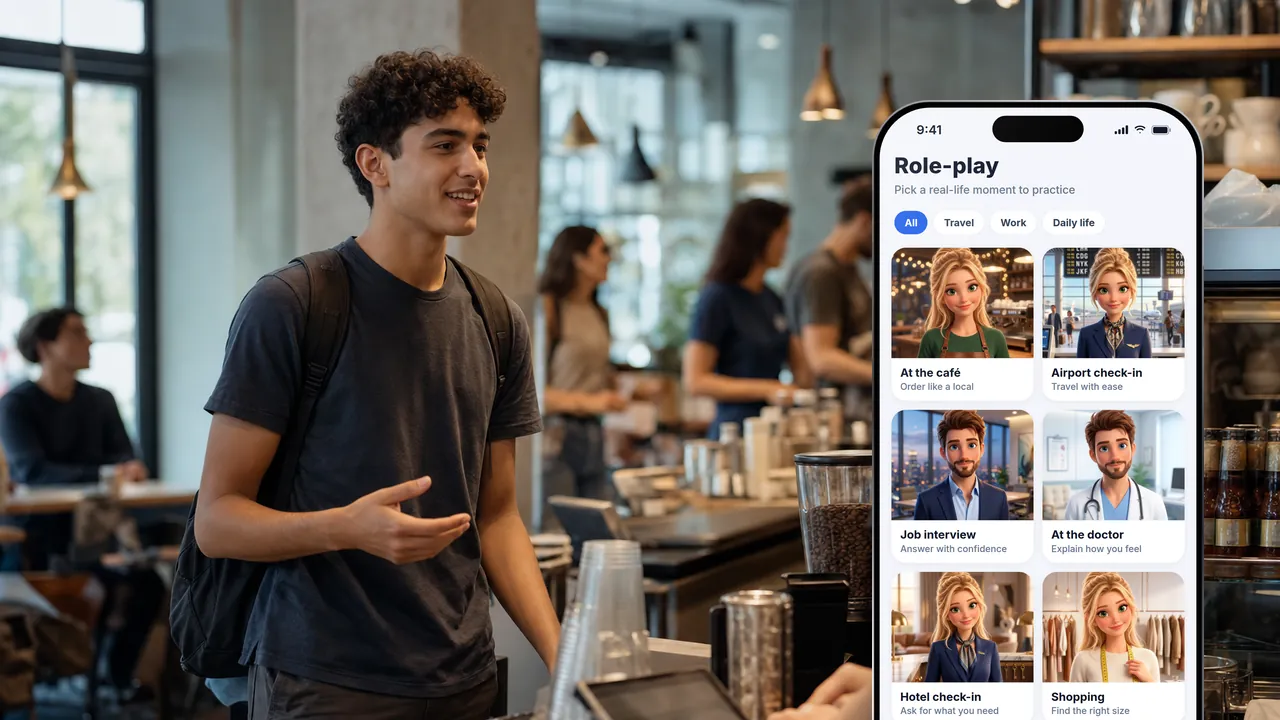
WitSpeak is a paid AI speaking coach built for the learner who has studied but can't get sentences out. Every session is spoken: open conversation with Mia or Alex, roleplays such as a job interview or a hotel check-in, and beginner lessons with pronunciation scoring. Each answer is scored on fluency, vocabulary, grammar and pronunciation and explained in your own language, with a stronger version of what you said so you can say it again better. Levels run A1–C1 in each language.
Limits: four learning languages, not dozens, and no flashcard-style vocabulary course. If you are starting from zero, pair it with a course app. For the English-only list, see Best AI English Speaking Apps; for the general list, see the best language learning apps right now.
A speaking routine that works with any of these apps
- Pick one real situation you will face this month.
- Say your answer out loud, read the feedback, then say it again straight away.
- Repeat the same situation on three different days.
- Then change one detail so you have to improvise.
- Keep a few minutes of flashcards if you like them, but after the speaking, not instead of it.
WitSpeak is our own product — read this comparison knowing who wrote it. Factual details (prices, features, trials) come from each provider's public pages and were last checked on Nov 24, 2026. Offerings change; verify with each provider before deciding. All product names and trademarks belong to their respective owners.
Frequently asked questions
Which language app focuses most on speaking?
Apps built around conversation: Speak, Praktika, Fluently, ISSEN and WitSpeak make you talk to an AI and correct you, and Pimsleur makes every lesson a spoken drill. For human conversation, use italki or HelloTalk.
Are flashcards useless for speaking?
No. They are good for remembering words. They just don't train you to build sentences and say them under time pressure. Use flashcards for vocabulary and a speaking app for turning that vocabulary into speech.
Is Duolingo a speaking app?
Duolingo's core lessons include some speaking exercises. Its paid Duolingo Max tier adds Roleplay and Video Call with Lily in supported courses, on iOS and Android only, according to Duolingo's help center.
Can I practice speaking a language without a partner?
Yes. AI conversation apps respond to what you say and give feedback, and audio courses like Pimsleur prompt you to answer out loud. Add a real person when you can, to test the language in less predictable conversations.
How long should I speak each day?
Short daily sessions are easier to keep than long weekly ones. What matters most is that you say full sentences out loud, get feedback and repeat them, every day you practice.
Sources
- Speak official site (checked Nov 24, 2026)
- Speak on Google Play (checked Nov 24, 2026)
- Praktika official site (checked Nov 24, 2026)
- Praktika on Google Play (checked Nov 24, 2026)
- Fluently official site (checked Nov 24, 2026)
- ISSEN official site (checked Nov 24, 2026)
- Pimsleur official site (checked Nov 24, 2026)
- HelloTalk: About (checked Nov 24, 2026)
- italki official site (checked Nov 24, 2026)
- Duolingo Help Center: What is Duolingo Max? (checked Nov 24, 2026)