Best Language Learning Apps Right Now: An Honest 2026 Roundup
Duolingo, Babbel, Speak, Praktika, Pimsleur, HelloTalk, italki and WitSpeak compared by what you actually do in each, checked on their own sites in Nov 2026.

Quick answer
There is no single best language learning app; the right one matches the skill you need. Duolingo and Babbel suit beginners building vocabulary and a habit, Pimsleur suits audio learners, italki and HelloTalk connect you with real people, and Speak, Praktika and WitSpeak (our product) suit learners whose main goal is speaking out loud with AI feedback.
Disclosure: WitSpeak is our product, and it is in this list. Every other app is described only from its own website, help center or store listing, checked on November 24, 2026, with the sources at the bottom. We leave out prices, ratings and user counts because they change often and differ by country.
Most "best app" lists rank apps as if everyone wants the same thing. They don't. A traveler who needs 200 phrases in six weeks, a student who reads well but freezes in conversation and a professional who needs a tutor's judgment are shopping for different tools. So this list sorts apps by the job they do best, and the table is in alphabetical order rather than a ranking.
Quick comparison
| App | How you learn | Speaking practice | Best for |
|---|---|---|---|
| Babbel | Short lessons tailored to your level, plus podcasts and dialogues | Speech recognition for pronunciation; conversation practice with an AI partner | Structured beginners who want grammar explained |
| Duolingo | Bite-sized, game-like lessons covering reading, writing, listening and speaking | In lessons; Duolingo Max (paid, mobile only) adds Roleplay and Video Call with Lily in some courses | Building a daily habit and first vocabulary |
| HelloTalk | Language exchange: chat with native speakers | Voice calls and voice rooms with real people; corrections from native speakers | Real conversations with people, for free to start |
| italki | Lessons with human tutors, no subscription | The whole lesson is conversation with a teacher | Accountability and human judgment |
| Pimsleur | Audio-first lessons: you answer spoken prompts out loud | Every lesson; Voice Coach gives pronunciation feedback | Hands-free learning on commutes and walks |
| Praktika | Lessons and free conversation with AI avatar tutors | Spoken conversation on any topic; tutor can explain in your native language | Learners who like a face on screen |
| Speak | Expert-written curriculum personalized by AI | Speaking out loud from day one, then real conversation with the Speak Tutor | A guided course built around speaking |
| WitSpeak | AI speaking coach: Free Talk, 80+ roleplays, beginner lessons | Every session is spoken; feedback after each answer | Turning what you know into confident spoken answers |
Best for a daily habit: Duolingo
Duolingo's core app is free and built around quick, game-like lessons with points, levels and reminders. Its site says the courses cover reading, writing, listening and speaking. It is the easiest way to start a language and keep a streak alive. Open conversation is not its center of gravity: that lives in Duolingo Max, a paid tier that its help center says adds Roleplay and Video Call with Lily, only in the iOS and Android apps and not in every course.
Best for structured beginners: Babbel
Babbel teaches through short lessons matched to your level, interests and time. Its site lists speech recognition for pronunciation, interactive dialogues, grammar tips, podcasts and conversation practice with an AI partner. Choose it if you like to understand why a sentence works before you say it.
Best speaking-first course: Speak
Speak's method is learn, practice, apply: you learn phrases native speakers use, repeat them out loud until they are automatic, then use them with the Speak Tutor. Its website lists Korean, Japanese, French, Spanish, Italian, English and Chinese. Its Google Play listing promises speaking out loud on day one and real-time feedback on pronunciation and grammar. Pick it if you want a lesson path that is mostly speaking.
Best for talking to an AI face: Praktika
Praktika's AI tutors are avatars with backstories and accents. Its site says the tutor can speak your native language, gives instant corrections on pronunciation, grammar and word choice, and lets you start a free conversation on any topic. Its Google Play listing names English, Korean, Japanese, Spanish, French, Portuguese, Italian and German.
Best for audio learners: Pimsleur
Pimsleur is built for listening and answering out loud, with no screen required. Its site lists roleplay through Speak Easy interactive transcripts, real-time pronunciation feedback through Voice Coach and Daily Challenges, and notes that not every feature is available in its English as a Second Language courses. It suits people whose study time is a commute.
Best for real people: italki and HelloTalk
italki is a marketplace of human tutors in 150+ languages, with no subscription and your own schedule. A good tutor notices things an app cannot, such as what you avoid saying. HelloTalk is a free-to-start language exchange: you chat, call and join voice rooms with native speakers, who can correct you in return for your help with your language. Both trade structure for real human contact.
Best for speaking confidence: WitSpeak (our product)
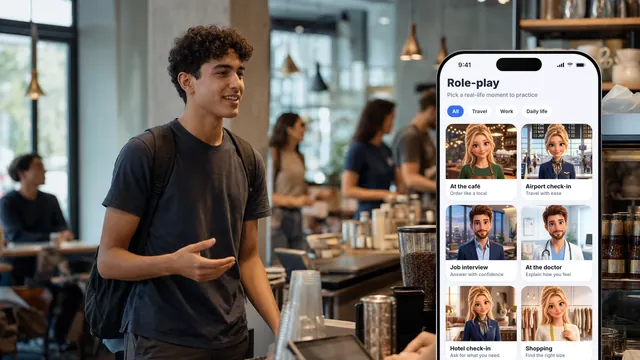
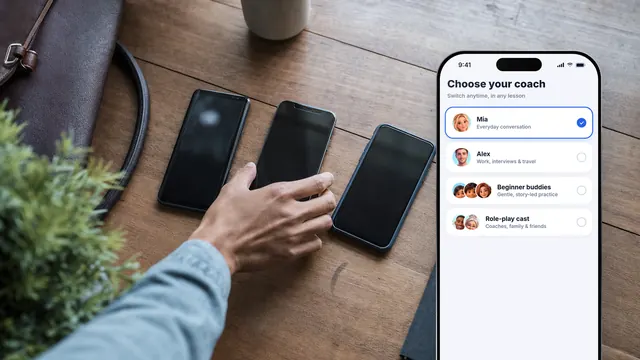
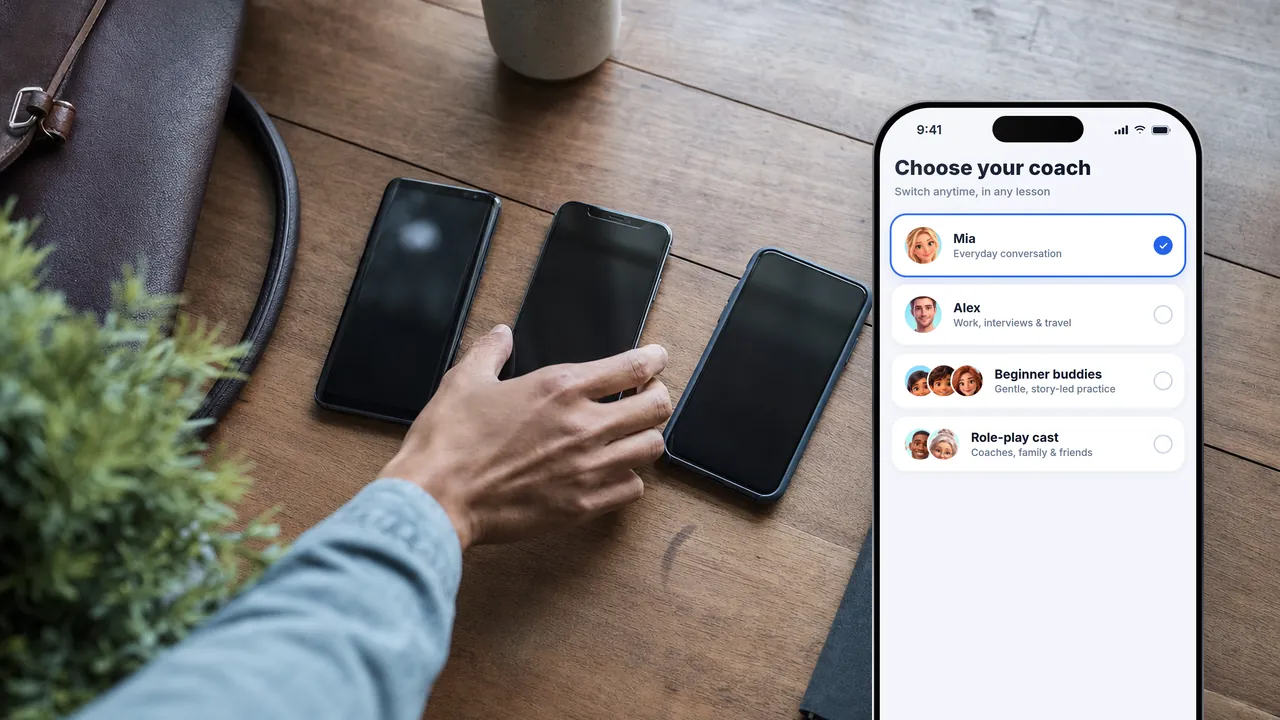
WitSpeak is a paid AI speaking coach for iPhone and Android. You talk out loud in Free Talk with Mia or Alex, rehearse 80+ adult roleplays and take beginner lessons with pronunciation scoring. After each answer you get feedback on fluency, vocabulary, grammar and pronunciation, explained in your own language (the app supports 44), with a stronger version of what you said. English and Spanish are fully available; French and German are in Early Access. English adds IELTS-style practice with band estimates (practice guidance, not official scores) and a phoneme coach.
Where it is weaker: it teaches four languages, not dozens, and it is built to make you speak, not to drill vocabulary lists. It works best once you can form basic sentences. A free way to try one part of it is the WitAccent accent test, which runs in the browser and guesses your first-language group from your English accent.
How to combine them
- Starting from zero: a course app (Duolingo, Babbel or Speak) for words and patterns, plus a few minutes of speaking each day.
- Know the words but freeze when talking: move most of your time to a speaking app; see language learning apps that focus on speaking.
- Learning English specifically: compare the English speaking apps in Best AI English Speaking Apps.
- Need accountability or an exam date: add a human tutor once a week.
- Judge any app after two weeks with one test: can you say more, faster, than before?
WitSpeak is our own product — read this comparison knowing who wrote it. Factual details (prices, features, trials) come from each provider's public pages and were last checked on Nov 24, 2026. Offerings change; verify with each provider before deciding. All product names and trademarks belong to their respective owners.
Frequently asked questions
What is the best language learning app right now?
It depends on the skill you need. Duolingo and Babbel are strong for beginners building vocabulary, Pimsleur for audio learners, italki and HelloTalk for real people, and Speak, Praktika and WitSpeak for speaking out loud with AI feedback. Many learners combine a course app with a speaking app.
Which language learning app is best for speaking?
Apps where every session is spoken: Speak, Praktika and WitSpeak use AI conversation with feedback, Pimsleur uses spoken audio drills, and italki gives you a human tutor. Duolingo adds speaking through its paid Max tier in supported courses.
Is Duolingo or Babbel better?
They suit different learners. Duolingo is game-like and free at its core, which makes it good for building a habit. Babbel explains grammar in short structured lessons and includes AI conversation practice. Try both for a week and keep the one you actually open every day.
Can an app make me fluent on its own?
Rarely. Apps give you vocabulary, patterns and practice time, but fluency also needs real, unpredictable conversation. Use an app for daily volume and add conversations with people, through a tutor, an exchange partner or real life.
Is WitSpeak free?
WitSpeak is a paid app; check the App Store or Google Play for the current offer in your country. The WitAccent English accent test on witspeak.ai is free and runs in the browser.
Sources
- Duolingo official site (checked Nov 24, 2026)
- Duolingo Help Center: What is Duolingo Max? (checked Nov 24, 2026)
- Babbel official site (checked Nov 24, 2026)
- Speak official site (checked Nov 24, 2026)
- Speak on Google Play (checked Nov 24, 2026)
- Praktika official site (checked Nov 24, 2026)
- Praktika on Google Play (checked Nov 24, 2026)
- Pimsleur official site (checked Nov 24, 2026)
- HelloTalk: About (checked Nov 24, 2026)
- italki official site (checked Nov 24, 2026)