How to Assign English Speaking Homework Students Actually Do: A Teacher's Guide
Five steps to speaking homework that gets real speech, not read-aloud scripts, plus task ideas by CEFR level and a fast way to check a class set.

Quick answer
Assign English speaking homework as a short, spoken task with one clear target: tell students what to talk about, to whom, for how long, and the single thing you will check. Give a few key phrases instead of a script, keep it to one to four minutes, and set it two or three times a week rather than one long presentation a month.
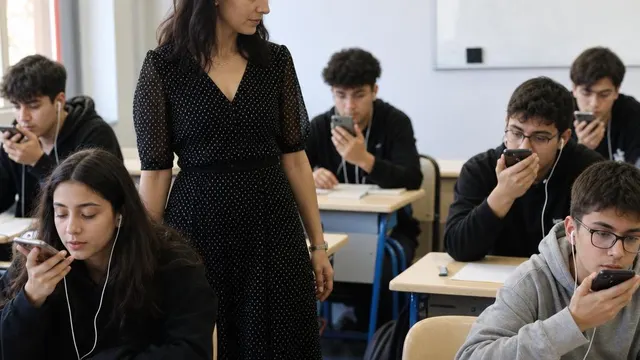
Speaking is the skill students practise least, and the reason is arithmetic rather than effort. In a 45-minute lesson with thirty students, even a teacher who never says a word could give each student about ninety seconds of talk. Most of the speaking practice a class needs has to happen outside the lesson, which means it has to be homework.
The trouble is that speaking homework is usually set like writing homework: "Prepare a paragraph about your hobbies and present it on Monday." Students write the text, learn it by heart or read it from their phone, and what you hear is reading aloud, not speaking. This guide is about designing tasks where students build sentences from memory and say them, and about checking those tasks without giving up your weekend.
Why speaking homework needs a different design from written homework
Recognising a word and producing it are different skills. To speak, a student has to pull the word out of memory, fit it into a sentence and say it while already planning the next one. Studies of retrieval and production practice show that this kind of effortful recall builds more durable learning than listening or repeating alone (Kang, Gollan & Pashler, 2013; Hopman & MacDonald, 2018), and words said out loud are remembered better than words read silently (Icht & Mama, 2019).
So the product of speaking homework should be a recording or a spoken exchange, not a text. Preparation is fine; the homework itself is the minute or two in which the student talks without reading.
How to set English speaking homework in five steps
- Pick one target. "Describe last weekend using the past simple" or "order food and fix a wrong order" is a target; "talk about your life" is not. Two targets split the student's attention and your marking.
- Set a time box. One to two minutes is plenty at A1–A2; two to four minutes works from B1 upwards. A short task set often gives more speaking than a long task set rarely.
- Give a situation and a listener. "Explain the school canteen rules to a new student from abroad" tells the student who they are talking to and why, which changes word choice and tone far more than a topic does.
- Scaffold without scripting. Three useful phrases or five key words help; a model paragraph turns the task back into reading aloud.
- Announce the one thing you will check. "This week I am only listening for past-tense endings" focuses the student and makes your feedback fast.
English speaking homework ideas by level
The tasks below are starting points: change the situation to fit your students' lives and keep one criterion per task. Levels follow the Council of Europe's CEFR descriptors, which are also a useful reference to share with students. For exam classes the same rules apply: one Part 2-style topic, one minute of preparation, two minutes of talk and one criterion.
| Level | Task | What to check |
|---|---|---|
| A1–A2 | Give a one-minute tour of your bedroom to a pen friend on a video call. | There is / there are, prepositions of place |
| A1–A2 | Leave a voice message inviting a friend to your birthday: day, time, place. | Days, times, "Would you like to…?" |
| B1 | Phone a shop to return a jacket that is the wrong size; stay polite when they refuse. | Polite requests, giving reasons |
| B1 | Recommend a series or game to a classmate who has never heard of it. | Opinion phrases, linking words |
| B2+ | Argue for or against a four-day school week in two minutes, then answer one objection. | Structure: claim, reason, example, concession |
| B2+ | Answer "Tell me about yourself" for a summer-job interview. | Relevant detail, natural pace, no notes |
How to check thirty recordings without losing your weekend
Listening to every recording from start to finish and correcting every error does not scale to a full class, and students cannot act on twenty corrections anyway. A layered routine is more sustainable:
- Completion first. Did the student submit, and did they speak for the time asked? This takes seconds per student and is often the grade in the first weeks.
- Then the announced criterion. Listen for the one thing you said you would check and note yes, partly or not yet.
- Then one sentence of feedback. One thing that worked and one thing to try next time is enough.
- Rotate deep listening. Each week, listen closely to a different small group so that every student gets detailed feedback over a few weeks.
What to do when students avoid speaking homework
Students who skip speaking tasks are usually anxious rather than lazy. Recording your own voice, especially in a language you are still learning, feels exposing. In the first weeks, grade on completion, reward attempts rather than accuracy, and never play a student's recording to the class without asking first. Our article on why learners freeze when they speak explains the mechanism if you want to discuss it with the class.
The second obstacle is slow feedback. A comment that arrives a week after the student spoke means little, which is why tools that respond straight away suit speaking homework well. We cover how to use them inside and around lessons in our guide to AI speaking practice in the classroom.
Setting speaking homework with WitSpeak
In WitSpeak, a teacher picks a role-play, shadowing, pronunciation or IELTS-style task in the teacher panel and assigns it to the whole class or to selected students, once or every week. Each student completes it out loud on their own phone with Mia, an AI speaking coach, and gets feedback on fluency, vocabulary, grammar and pronunciation after each answer. The teacher sees completion, speaking minutes and the sounds the class finds hardest, in the panel and in a weekly email. If your school connects Google Classroom, Moodle or Canvas, only the score returns to the gradebook.
Teachers never receive students' voice recordings, and written transcripts are shared only when the student agrees. Before you bring any app into class, run through our student data and parental consent checklist. If you would like to try this kind of homework with your own classes, WitSpeak for Schools explains how the teacher panel works and how a school starts its free 14-day trial.
Frequently asked questions
How long should English speaking homework be?
One to two minutes of speaking is enough at beginner level and two to four minutes from intermediate upwards. Setting a short task two or three times a week gives students more speaking practice than one long task a month.
How do I stop students from reading a script?
Give three key phrases or a few words instead of a model text, and build the task around a situation with a listener. If a recording sounds flat or you hear paper rustling, shorten the preparation time next time.
How should I grade speaking homework?
Grade on completion for the first few weeks to lower anxiety. Then add one criterion you announced in advance, such as past-tense endings or a target sound, and give one sentence of feedback per student.
What speaking homework works for shy students?
Tasks done alone at home, such as a voice message or a conversation with an AI coach, feel safer than speaking in front of the class. Never play recordings to classmates without permission, and reward attempts rather than accuracy.
Do students need a computer for speaking homework?
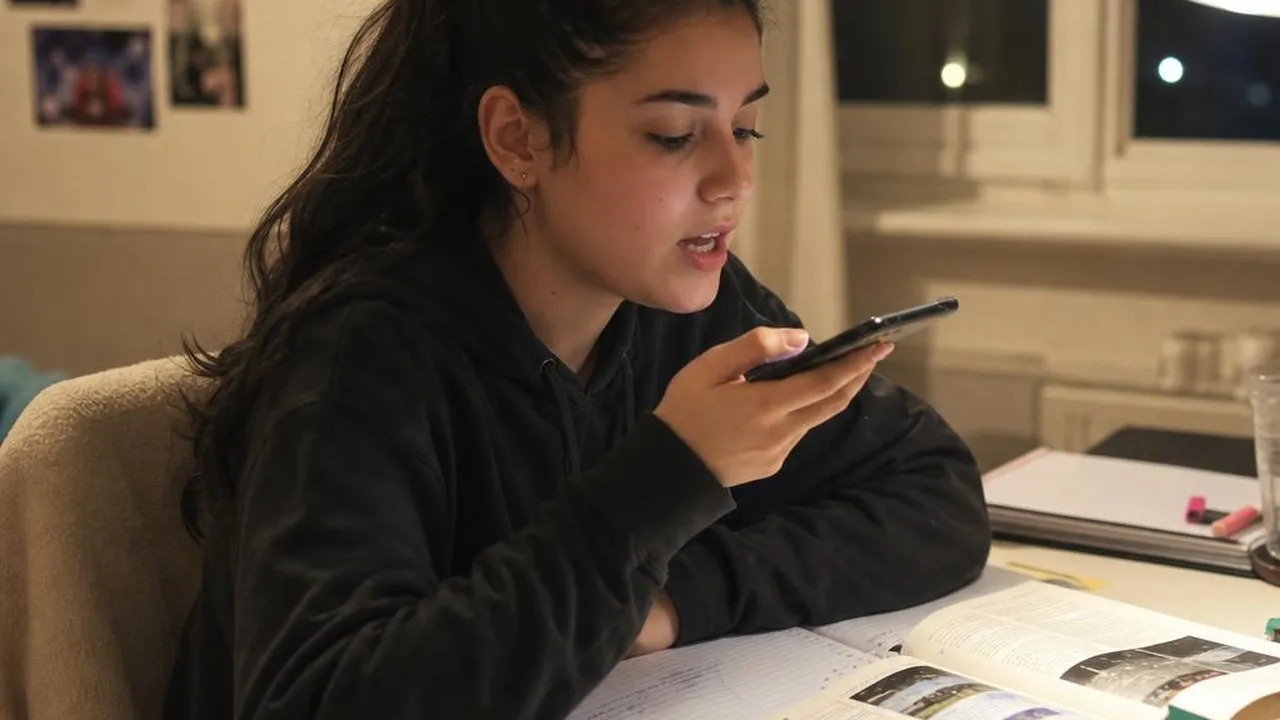
No. A smartphone is enough to record a task or practise with an AI app, and students can do it at home or anywhere quiet.
Sources
- Kang, Gollan & Pashler (2013), Psychonomic Bulletin & Review — retrieval practice beats imitation
- Hopman & MacDonald (2018), Psychological Science — production practice improves language learning
- Icht & Mama (2019), Language Teaching Research — the vocal production effect in L2 vocabulary
- Council of Europe — Common European Framework of Reference for Languages (CEFR)