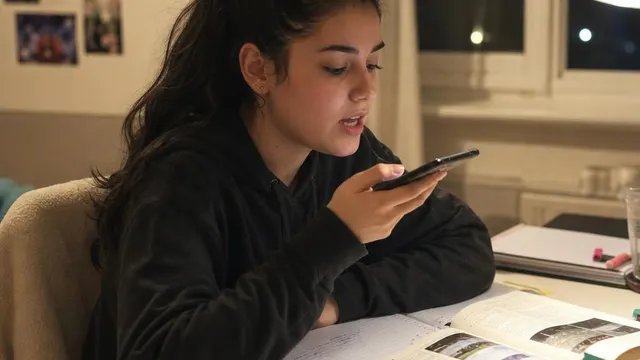
AI Speaking Practice in the Classroom: A Practical Plan for English Teachers
Four ways to use AI speaking practice in English lessons, what AI feedback can and cannot tell you, and how the teacher's role changes.

Quick answer
AI speaking practice works in the classroom when it takes over the repetitive part of speaking practice, not the teacher. Students rehearse out loud with an AI partner at their own level and get instant feedback, at home or in a short station, while the teacher keeps lesson time for goal-setting, real interaction and the students who are falling behind.
Most English teachers know the pattern: students can explain the grammar rule and understand the reading text, then go quiet as soon as they have to speak. In a full class there is simply not enough time for each student to talk. AI speaking practice is one way to close that gap, but without a plan it becomes one more screen habit rather than more speaking.
This guide is for teachers who want to use AI for speaking practice with a class. It covers what the technology is good and bad at, four lesson models you can try next week, and what to check before you start. UNESCO's guidance on generative AI in education makes a point worth keeping in mind throughout: AI should support human teachers, with human judgement and oversight at the centre (UNESCO, 2023).
What AI does well in speaking lessons, and what it cannot do
An AI speaking partner listens without getting tired, lets a student try the same sentence as many times as they need and responds immediately. For students who dread speaking in front of classmates, it offers a space where mistakes carry no social cost. Good tools also adjust speed and vocabulary to the student's level.
Its limits are just as real. It cannot read body language, the mood of the room or the reason a student is unusually quiet today. Its feedback is not always right, and pronunciation and accent judgements in particular can be wrong. Treat AI feedback as a direction for the student and a source of data for you, not as a final verdict. Our explainer on what AI speaking feedback actually measures goes into the detail.
Four ways to use AI speaking practice with a class
- Homework plus pair share. Students complete a short AI conversation at home; the lesson opens with pairs retelling or continuing the same scenario with each other. This is the best fit when phones are restricted in class.
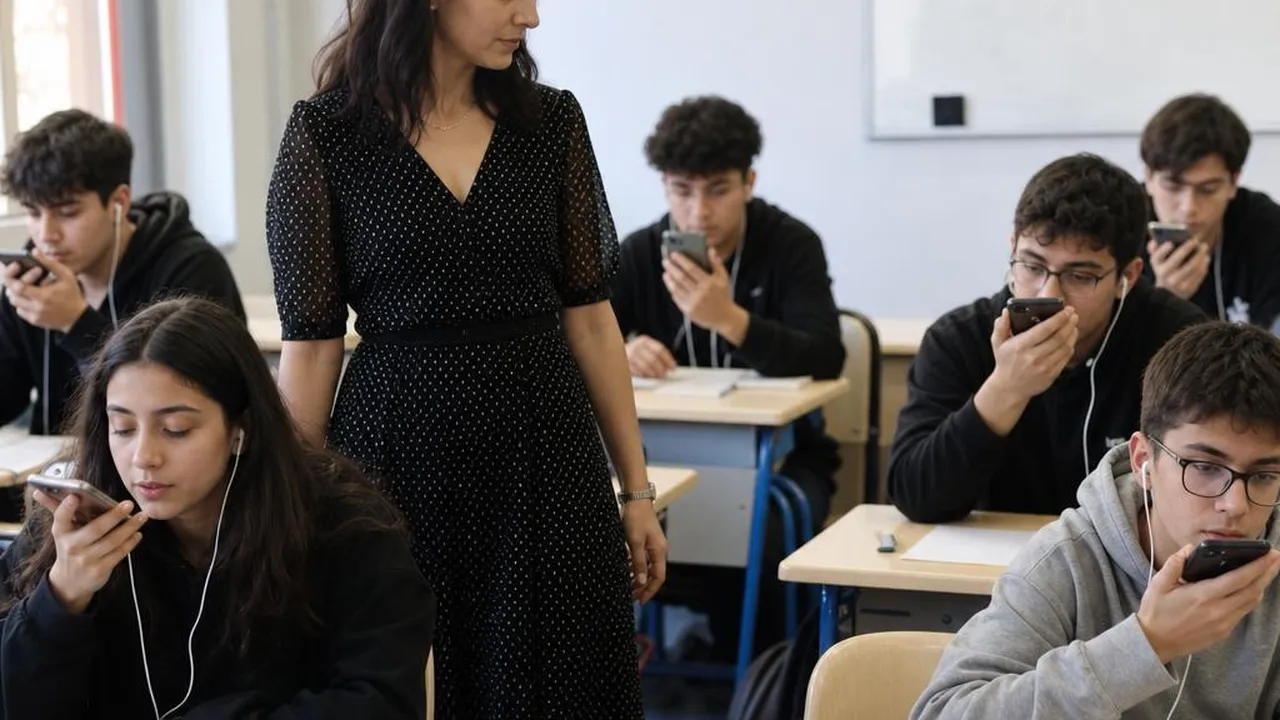
- Station rotation. Split the class into three groups: one speaks with you, one does a written task, one practises with AI on headphones. Rotate every fifteen minutes so each student gets both human and AI speaking time.
- Warm-up rehearsal. Before a lesson on, say, complaining politely, students rehearse a five-minute role-play with AI; in class you build on the language they have just used and the problems they ran into.
- Exit check. In the last minutes, students answer one spoken question with the AI and note the one piece of feedback they will work on next time. You get a quick picture of who could use the lesson's language.
How the teacher's role changes
When AI covers repetition and immediate feedback, your time goes to the work only a teacher can do: choosing goals, setting up real conversations between people, and reaching the students who are falling behind. That does not mean listening to every sentence every student said. Knowing who practised, who has gone quiet and which sounds or structures the whole class struggles with is usually enough to plan the next lesson.
The task itself still needs designing. One target, a short time box, a situation and one announced criterion work for AI practice exactly as they do for any other spoken task; our step-by-step guide to setting speaking homework walks through each decision.
Using AI with mixed-ability classes
A single class can include students at A2 and at B2. One advantage of AI practice is that everyone can work on the same scenario at their own level: a beginner gets short, guided turns, while a stronger student in the same role-play meets follow-up questions and less predictable replies. The CEFR levels give you and the students a shared way to describe where each person is.
Privacy and parental consent: what to settle first
Any app that processes students' voices raises data questions for the school. Before you start, find out where recordings are stored and for how long, what you as the teacher can see, how parental consent is collected for younger students, and whether student data is ever used to train AI models. We gathered the full list in our student data and parental consent checklist for AI apps.
How WitSpeak fits into a lesson
In WitSpeak, students speak out loud with Mia, an AI speaking coach, on their own iPhone or Android phone and complete the task you assigned: a role-play, shadowing, pronunciation practice or an IELTS-style question. The teacher panel shows weekly activity, speaking minutes, homework completion, each student's level progress and the sounds the class finds hardest. Teachers never receive voice recordings, and written transcripts are shared only with the student's consent. Nothing needs installing on school computers.
It works best with students aged 13 and over; younger groups can be assessed with us in a demo. To see the panel and how a school gets started, visit WitSpeak for Schools.
Frequently asked questions
Will AI replace English teachers?
No. AI can take on repetitive speaking practice and instant feedback, but setting goals, building real interaction and noticing what a student needs remain the teacher's job.
How can I use AI speaking practice if phones are banned in class?
Set the AI conversation as homework and open the next lesson with pairs continuing the same scenario together. Students get more speaking time and the classroom phone rule stays as it is.
Is AI speaking feedback always accurate?
Not always. AI can misjudge pronunciation and accent in particular. Treat its feedback as a pointer for the student and as data for the teacher rather than as a grade.
What age is AI speaking practice suitable for?
It depends on the app and on your school's consent process. Before choosing one, check its minimum age, how parental consent is collected and what teachers can see.
Do students need headphones for AI practice in class?
Headphones with a microphone help in the station model, where several students speak at once. For homework they are optional; a quiet room is enough.